PRESS CONFERENCE - GPSI
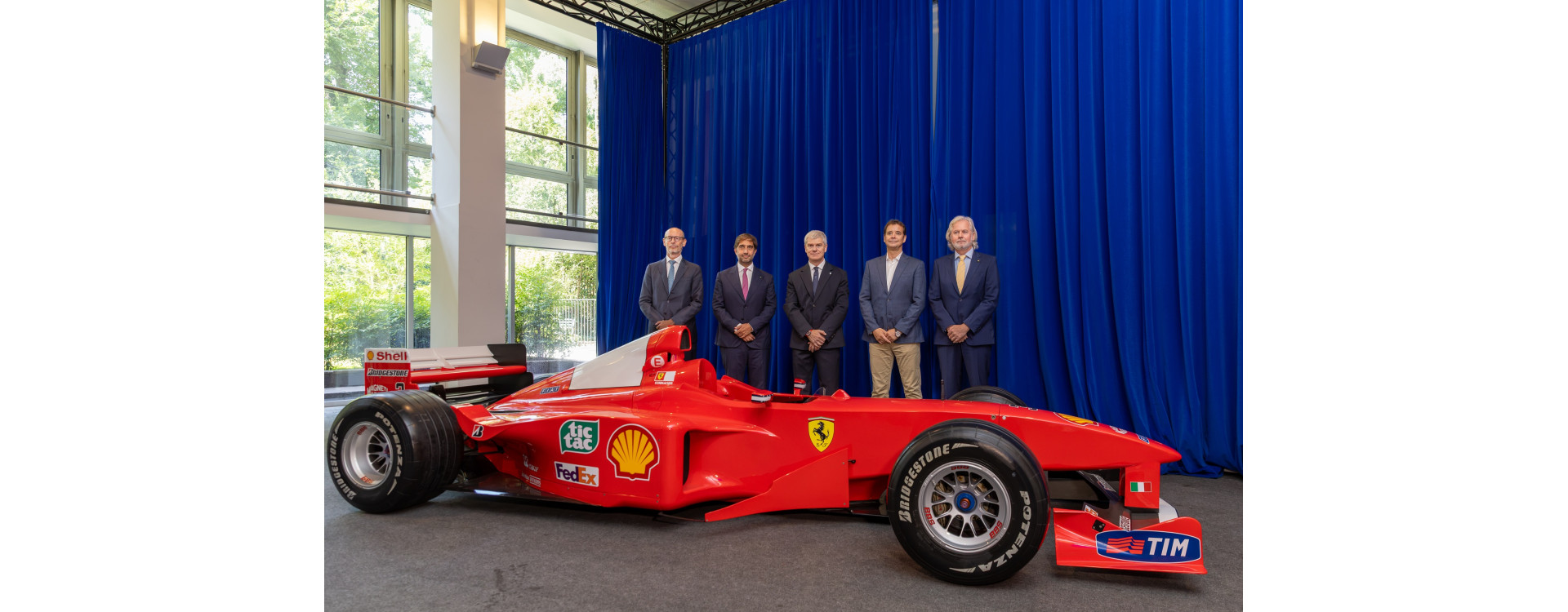
PRESS RELEASE - Tuesday, September 8, 2026
Held from 2 to 4 October at the Mugello circuit, the Gran Premio Storico d’Italia will pay tribute to the most glorious decade in Ferrari’s Formula 1 history, from 1996 to 2006. Nine cars from that era will take to the track in the hands of drivers who played a part in the Scuderia’s extraordinary success.
SCUDERIA FERRARI – GOLDEN AGE : 1996-2006
As the only team to have competed in every Formula 1 season since the World Championship was inaugurated in 1950, Scuderia Ferrari has enjoyed several successful eras, but none matched the achievements of the 1996-2006 period. During this extraordinary decade, the Scuderia secured six Constructors’ World Championships, 87 Grand Prix victories and 203 podium finishes.
It remains closely associated with the legendary Dream Team of Jean Todt, Ross Brawn, Rory Byrne and Michael Schumacher, who claimed five Drivers’ World Championships at the wheel of the red cars. This golden chapter in Ferrari’s history will be celebrated at the inaugural Gran Premio Storico d’Italia, which takes place at the Mugello Circuit from 2 to 4 October.
Organised by HVM Racing and the Mugello circuit, in collaboration with Ferrari, the event will bring together nine cars designed in Maranello between 1996 and 2006, from the F310 to the 248 F1. Visitors will be able to appreciate the scale of the technical developments that shaped this legendary lineage, from the transition from the 3.0-litre naturally aspirated V10 to the 2.4-litre V8 and the introduction of grooved tyres, to the growing use of aerodynamic appendages such as bargeboards, turning vanes, cooling chimneys and even the short-lived “penguin wings”.
LEGENDARY DRIVERS
These cars will take to the track as part of the “Golden Age 1996-2006” parades, driven by iconic figures from Ferrari’s racing history, including René Arnoux, Gerhard Berger, Giancarlo Fisichella, Eddie Irvine, Mika Salo and others whose identities will be revealed soon via the event’s Instagram and Facebook accounts.
René Arnoux competed in 149 Formula 1 Grand Prix between 1978 and 1989, claiming seven victories and 22 podium finishes. Rising to prominence with Renault, where he secured his first Grand Prix wins, the Frenchman joined Ferrari in 1983 and enjoyed his finest season by finishing third in the World Championship. That same year, he also helped Scuderia Ferrari secure the Constructors’ title with three victories. Arnoux also remains famous for his memorable duel with Gilles Villeneuve during the 1979 French Grand Prix at Dijon-Prenois, widely regarded as one of the greatest battles in Formula 1 history.
Luca Badoer contested 49 Formula 1 Grand Prix with Scuderia Italia, Minardi and Forti. During his long tenure as Scuderia Ferrari’s official test driver, the Italian played a crucial role in the development of the cars that enabled Ferrari to dominate the sport during the Schumacher era. In 2009, at the age of 38, he made an unexpected return to racing, contesting two Grand Prix for Ferrari as a replacement for the injured Felipe Massa.
Gerhard Berger competed in 210 Formula 1 Grand Prix between 1984 and 1997, claiming ten victories and 48 podium finishes. The Austrian raced for Ferrari during two separate spells, from 1987 to 1989 and again from 1993 to 1995 and finished third in the World Championship on two occasions. Renowned for his talent, bravery and sense of humour, Berger was also Ayrton Senna’s team-mate and one of his closest friends at McLaren. A race winner with Benetton, Ferrari and McLaren, he remains one of the most popular drivers of his generation and one of the finest never to have won the World Championship title.
Andrea Bertolini is one of Ferrari’s most loyal representatives in endurance racing. Having become one of the marque’s youngest sports car test drivers at just 19 years old, he later joined Ferrari’s Corse Clienti and Maserati department before being called up in 2004 as an official test driver for Scuderia Ferrari’s Formula 1 team, during the Schumacher era. He played a key role in the development of the formidable Maserati MC12, based on the Ferrari Enzo. A benchmark driver in GT racing, he won the FIA GT Championship three times (2006, 2008 and 2009), before claiming the FIA GT1 World Championship in 2010 and victory in the GTE Am class at the 2015 24 Hours of Le Mans.
Giancarlo Fisichella competed in 229 Formula 1 Grand Prix during his career, securing three victories with Jordan in 2003 and Renault in 2005 and 2006. In 2009, the Italian made Force India history by delivering the team’s first pole position and first podium finish at the Belgian Grand Prix. This performance earned him a place at Ferrari for the final five races of the season, where he replaced the injured Felipe Massa. After Formula 1, Fisichella enjoyed further success in endurance and GT racing, notably winning the LM GTE Pro category at the 24 Hours of Le Mans twice, in 2012 and 2014, behind the wheel of a Ferrari 458 GT2/GTE.
Antonio Giovinazzi competed in 62 Formula 1 Grand Prix between 2017 and 2021, including three full seasons with Alfa Romeo Racing. The Italian served as a reserve driver for Scuderia Ferrari before turning his focus to endurance racing. In 2023, he made history by winning the centenary edition of the 24 Hours of Le Mans in the Ferrari 499P alongside James Calado and Alessandro Pier Guidi, giving the Maranello marque victory on its return to the top class of the race after a 50-year absence.
Eddie Irvine was Michael Schumacher’s first team-mate at Ferrari, from 1996 to 1999. His final season with the Scuderia would prove to be the most successful of his career: the Irishman claimed all four of his Formula 1 victories that year and led the championship until the final round at Suzuka, Japan. He was ultimately beaten by Mika Häkkinen and his McLaren. Competing in Formula 1 from 1993 to 2002, Irvine stood on the podium 26 times while racing for Jordan, Ferrari and Jaguar.
Nicola Larini joined Ferrari as a test driver in 1992 and contested two Grand Prix for the Scuderia that same year. Tasked with developing the active suspension system, the Italian was called upon to replace the injured Jean Alesi for two races, including the tragic San Marino Grand Prix, which he finished in an impressive second place. His greatest competitive success, however, came in touring cars, where he won the Italian Championship in 1992 before claiming the highly competitive DTM title in 1993 at the wheel of the legendary Alfa Romeo 155 V6 TI.
Mika Salo competed in 110 Formula 1 Grand Prix, including six appearances for Ferrari in 1999 when he replaced Michael Schumacher following the German’s injury at the British Grand Prix. The Finn performed the role superbly, securing two podium finishes and famously yielding victory to team-mate Eddie Irvine in Germany when the win appeared to be his. After his Formula 1 career, Mika Salo continued his association with Ferrari in endurance racing, notably winning the GT2 class at the 24 Hours of Le Mans in 2008 and 2009.
250 CARS IN COMPETITION, INCLUDING 100 FORMULA 1
Beyond the Formula 1 demonstrations, the weekend will feature a packed programme of 18 races across eight grids.
Historic Grand Prix Car Association (HGPCA)
Pre-1966 Formula 1
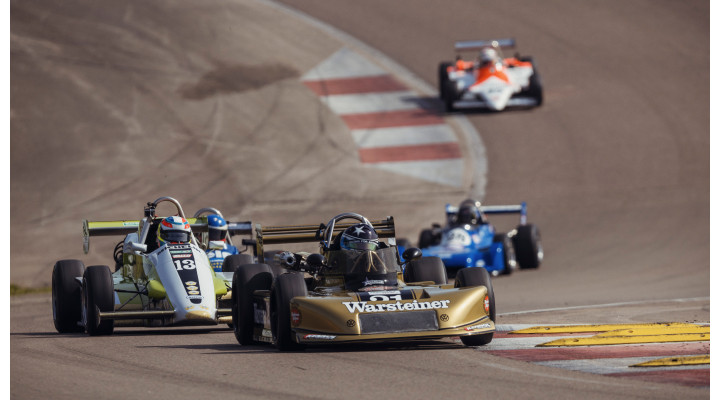
This grid takes spectators back to the first golden age of Formula 1, when single-seaters, still free from sponsor branding, proudly carried the national colours of the countries they represented. These years were defined by fierce rivalries and major technical innovations, notably the arrival of the rear-engine layout and, later, the elegant 1.5-litre Formula 1 cars raced between 1961 and 1965.
Masters Racing Legends
Formula 1 from 1966 to 1985
The grid brings together Formula 1 cars built during the most diverse and innovative engineering era in the history of the sport. From the “cigar-shaped” machines of the mid-1960s to flat-bottomed cars and the formidable ground-effect designs, the appearance of these single-seaters never fails to surprise.
BOSS GP
Formula 1, IndyCar, World Series 3.5 from 1990 to 2020
This grid features cars built to the regulations of the leading single-seater categories of recent decades, including Formula 1, Formula 2, Formula 3000, GP2, World Series by Renault 3.5, A1GP, IndyCar and even the exotic Formula Nippon. Formula 1 cars regularly seen on track include the 2006 Toro Rosso STR1, the 2003 Williams FW25, the 1997 Benetton B197, the 1999 Prost AP02 and the 2010 Lotus T127.
F2 Classic Interseries
Formula 2 from 1967 to 1978
The Formula 1 feeder series of the 1960s and 1970s was not a one-make category, but an open championship in which the finest specialist constructors competed against one another: Brabham, Chevron, Lola, March, Martini and many others. Powered first by 1.6-litre engines and later by 2.0-litre units, these lightweight 500 kg single-seaters provided the proving ground for future stars such as Jacky Ickx, Jean-Pierre Beltoise, Jean-Pierre Jabouille and René Arnoux.
F3 Classic Interseries
Formula 3 from 1971 to 1984
Young hopefuls racing in Formula 3 during the 1970s and 1980s all dreamed of winning at Monaco under the watchful eye of Formula 1 team managers. The unofficial rule was that the winner would move straight into Formula 1 the following year, bypassing Formula 2 altogether. Past winners include Patrick Depailler, Jacques Laffite, Didier Pironi and Alain Prost. The cars are Martini, Chevron, March and Ralt chassis, all restored in their original liveries.
Historic F3 1000cc & F. Ford
Formula Ford and Formula 3 from 1964 to 1970
No fewer than 1,000 of these single-seaters were built during the 1960s by manufacturers such as Brabham, Lotus, Chevron, March, Ensign, Matra, Merlyn, Titan and Tecno. Powered by compact 1,000 cc engines, they quickly earned the nickname "Screamers", a fitting tribute to the distinctive sound they produced as they revved to 10,000 rpm. The category became a genuine launchpad for future motorsport legends, including Jackie Stewart, James Hunt, Niki Lauda and Emerson Fittipaldi.
Historic Formula Junior : Lurani Trophy
Formula Junior from 1958 to 1963
In 1958, Italian Count Johnny Lurani created a junior formula based on inexpensive mechanical components taken from production cars. Just three years later, races were being held every weekend across all five continents, and the category had become the direct stepping stone to Formula 1, helping launch the careers of drivers such as Jim Clark, John Surtees, Denny Hulme and Jochen Rindt. While Italian marques dominated the inaugural season, they were soon overtaken by British constructors.
Master Endurance Legends 1 & 2
Prototypes and GT cars from 1995 to 2019
The series brings together some of the most beloved racing cars among Millennials and Generation Z. And for good reason: they have all driven them on simulators !
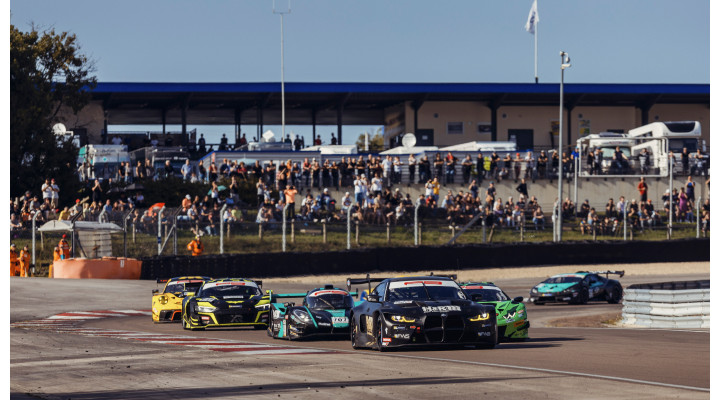
As at Le Mans, the cars run by day and by night on Saturday evening. As at Le Mans, prototypes and GT cars share the track. The fastest are the LMP1 machines (Lola, Peugeot, Pescarolo, Zytek), but knowledgeable enthusiasts always keep an eye on the battles in the GT ranks (Aston Martin Vantage, Bentley Continental, Ferrari 458, BMW Z4).
EXPERIENCE : GRANDSTANDS & PADDOCK
The public will have unique opportunities to get up close to the cars that have made motorsport history. With a standard admission ticket, all spectators will have a grandstand seat and access to several other areas of the circuit.
Tickets providing access to the paddock will also be available. Ticket holders will be able to enjoy exclusive experiences within the exceptional “Scuderia Ferrari – Golden Age: 1996–2006” exhibition, which will bring together nine iconic single-seaters from this legendary decade, from the F310 to the 248 F1, alongside the 1995 Ferrari 412 T2, the last Scuderia Ferrari Formula 1 car powered by a V12 engine. Meet-and-greet sessions and autograph signings with attending Ferrari drivers will also be organised. The Fan Zone will feature Formula 1 simulators, a giant screen broadcasting the action live, an exhibitors’ village dedicated to the automotive world and a food court.
Finally, VIP ticket holders will enjoy an enhanced experience, including access to the Drivers’ Club and Premium Hospitality services, as well as the opportunity to take part in Grid Walks and guided paddock tours. Tickets will be available as either three-day passes (Friday to Sunday) or single-day tickets. Access to the Formula 1 and Formula 2 Grid Walk can be purchased separately.
Further information is available on the granpremiostorico.com and mugellocircuit.com websites.
STATEMENTS
Laurent Vallery-Masson, CEO of HVM Racing : « Bringing the Gran Premio Storico d’Italia to life represents far more than the creation of a new event for HVM Racing. It is an ambition to revive, at Mugello, the full richness of automotive heritage, with a particular focus on the legacy of the Scuderia Ferrari.
Together with the Mugello Circuit, in collaboration with Ferrari and under the auspices of the ACI, we aim to establish a must-attend international event. More than 250 cars, including around one hundred Formula 1 cars, will retrace over half a century of history, with a special tribute to the 1996–2006 period, one of the Scuderia’s most glorious eras.
For HVM Racing, this project marks a new milestone : bringing the experience gained through more than one hundred events to an international audience. »
Antonello Coletta, Global Head of Ferrari Endurance and Corse Clienti : « The Gran Premio Storico d’Italia represents a unique and invaluable opportunity to celebrate and experience the rich heritage of motor racing, a sporting tradition that has inspired and captivated millions of enthusiasts around the world.
The decision to establish the Mugello International Circuit as the Italian home of this prestigious event is, in my view, a significant accomplishment for our country and for the preservation of our sporting heritage. I am particularly proud that Italian fans will have the opportunity to enjoy such an extraordinary celebration of motorsport history, made even more meaningful by the tribute to the decade that saw Scuderia Ferrari and Michael Schumacher rise to prominence together, forging a partnership that became a benchmark of excellence and a symbol of success throughout the sporting world. »
Paolo Poli, CEO & Managing Director of Mugello Circuit : « It is an honour to host the first edition of the Gran Premio Storico d’Italia at Mugello Circuit. The fact that we have been chosen to host this prestigious event confirms the importance of our facility on an international scale. Owned by Ferrari since 1988, the 5.245 km Tuscan track played a crucial role in developing the Prancing Horse's single-seaters as testing ground during the years of Michael Schumacher, Eddie Irvine, Rubens Barrichello, and Felipe Massa. Today, the Mugello Circuit still hosts Formula 1 testing sessions, alongside national and international car races. The Tuscan track is the perfect location to pay tribute to this heritage within an innovative infrastructure. »
Geronimo La Russa, President of the Automobile Club of Italy : « With the first edition of the Gran Premio Storico d’Italia, we are celebrating the most precious heritage of our motorsport : its history. Bringing these cars to Mugello, with a strong focus on Formula 1, means bringing the living memory of motor racing back to life on track. And, moreover, it is a celebration of a legendary decade for Ferrari, from 1996 to 2006, marked by victories and Drivers’ and Constructors’ titles. Hearing the sound of those iconic single-seaters again will be a unique emotion. I would like to thank Ferrari for its important contribution to an event that brings together sport, passion and culture. »
CONTACTS PRESSE
Adrien REMY-SPIRE – HVM Racing
📧presse@hvmracing.fr
Related posts